
Active Campaign

Creatine for Brain Health? Do the claims hold up?

We are investigating creatine products marketed for cognitive benefits that may not differ from standard formulations despite higher prices or different labeling.

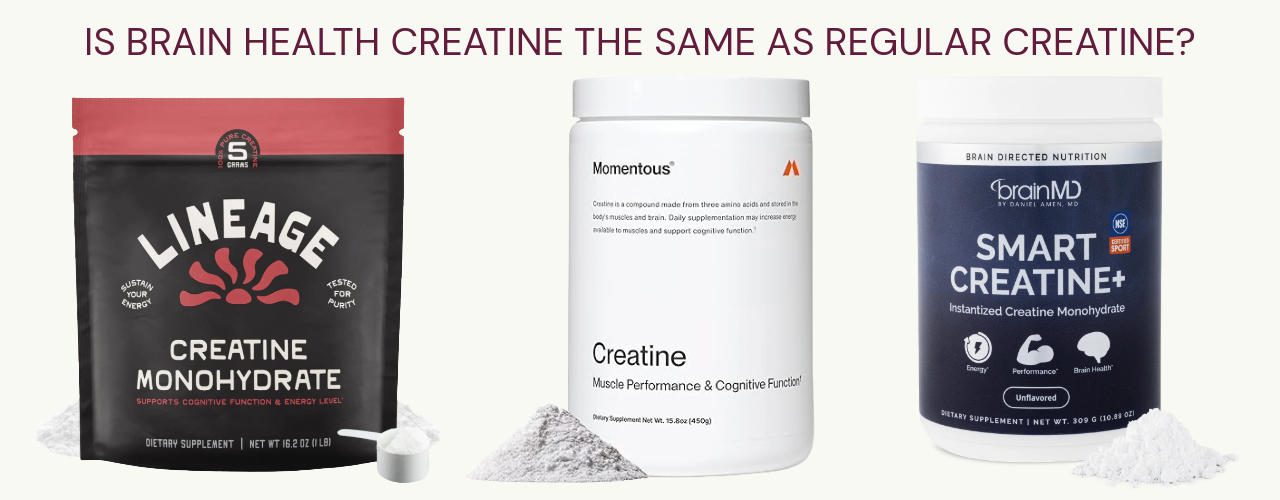
Creatine is widely known for its role in physical performance and athletic use. More recently, some products have been marketed as supporting cognitive function—such as focus, memory, and overall brain health. These claims can lead consumers to believe they are purchasing a specialized or enhanced formulation designed for mental performance.

In many cases, however, these products may contain the same type of creatine found in standard supplements, despite being labeled differently or sold at a higher price point. Our investigation focuses on whether these marketing claims accurately reflect the product’s formulation and whether consumers may have been misled into paying more for benefits that are not meaningfully different from traditional creatine supplements.

Women's Creatine Investigation

Is “creatine for women” actually different? Or just marketed that way?

Did you buy creatine for focus, memory, or “brain health”?

You’re not alone — and those claims may not be as clear as they seem.

Creatine is widely known for physical performance and athletic use. More recently, some products have been marketed as supporting cognitive function — including focus, memory, and overall brain health.
In many cases, these products may contain the same type of creatine found in standard supplements, despite different labeling or higher pricing.

What we’re looking into:
-Creatine products marketed for “brain health” or cognitive performance
-Whether these products differ from standard creatine
-Whether pricing and labeling accurately reflect those differences

We are investigating whether these cognitive or “brain boosting” claims are supported by reliable evidence, or whether consumers may have been misled about the benefits of these products.

If you purchased a creatine supplement based on claims related to mental or cognitive performance, we’d like to learn more about your experience. You may be eligible to pursue a claim.

Please answer a few quick questions below to help us determine whether you may qualify.

Disclaimer: This form may be considered attorney advertising. The information provided is for general informational purposes only and is not intended as legal advice. Past results do not guarantee a similar outcome. The choice of a lawyer is an important decision and should not be based solely upon advertisements. Submitting your information does not create an attorney–client relationship. An attorney–client relationship will only be formed if and when a written representation agreement is signed. By providing your contact information, you consent to being contacted by our law firm (or its partners) about your potential claim. You are under no obligation to participate, and you may choose not to proceed after receiving more information. This matter will be handled on a contingency fee basis, meaning you will not owe attorneys’ fees unless there is a recovery. In some jurisdictions, you may still be responsible for costs and expenses, which will be explained before you decide whether to proceed. Attorney responsible for this content: Erin Ruben Office address: 421 N Harrington St STE 460, Raleigh, NC, 27603 Privacy Notice: We respect your privacy. Your information will be kept strictly confidential and used only to evaluate your eligibility and contact you about this case. We will never sell or rent your data. Your details will only be shared with attorneys and staff working on this matter.

Brain Health Creatine Supplements Investigation

Some creatine supplements are marketed as improving cognitive function, focus, or mental health. We are investigating whether these “brain boosting” claims are supported by reliable evidence—or if consumers were misled. Our focus is on products marketed for mental or cognitive benefits, not traditional athletic performance.

Name(Required)
Email(Required)
Address(Required)
Did you purchase a creatine supplement marketed for brain or cognitive benefits?(Required)
What product did you purchase?(Required)
Do you still have proof of purchase (receipt, order confirmation, or bank statement)?(Required)
Are you interested in taking legal action?(Required)

Why a Class Action?

Most class actions start the same way: a problem that impacts many individuals, but feels impractical—or impossible—for any one person to take on alone. The imbalance of resources is often obvious from the start.

Class actions allow claims to be resolved together when harm is widespread, and the legal or factual issues are common. Class actions may often provide the only way to recover damages for individuals, while holding a corporation accountable for its misconduct.


Learn More

When a case is well suited to be a class action, we look for the right client to serve as a class representative. A class representative serves as a fiduciary for all class members, committing to fairly and adequately represent their shared interests as if they were his or her own. The representative need not be legally sophisticated, but must remain engaged, informed, and cooperative throughout the litigation by understanding the claims, providing relevant facts, and actively participating in permitted discovery, including depositions, testimony, written responses, and document production. 

By serving in this critically important role, the representative voluntarily acts on behalf of others with similar claims, recognizing that class actions promote fairness, efficiency, and equal benefit, while serving as an important mechanism to protect individuals or businesses harmed in a similar manner.

Class actions often require patience. There may be long periods of expert investigation, discovery, and motion practice before visible progress appears.

We communicate clearly about where the case stands and what that means for our clients. When strategic decisions need to be made, we focus on the long-term interests of the clients and potential class members. This includes guiding clients through each stage, explaining what to expect and how developments may affect the path forward.

While outcomes depend on the law and the facts, careful early work and consistent execution help reduce uncertainty and support credible advocacy over the life of the case.

The Team You Want

Fighting On Your Side